
The first winter in my 1970s split-level, I kept flipping lights on out of habit, even at midday. The windows were fine. The layout was the problem. Once I started treating daylight like something I could “aim” instead of just “accept,” everything changed. Mirrors were the cheapest, fastest way to make a room feel brighter and bigger, without touching a single window.
This guide walks you through mirror placement that actually moves natural light around a room, especially when you have one good window and a whole lot of shadow.
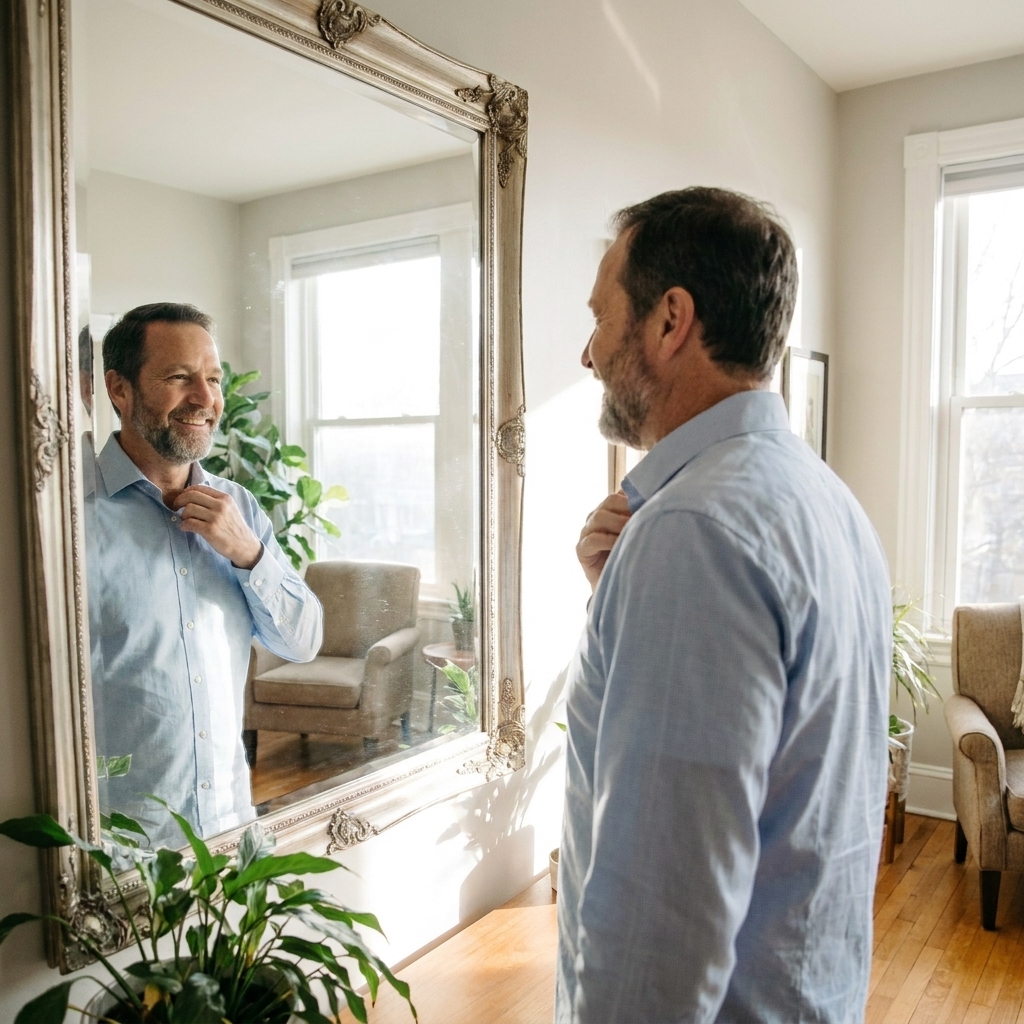
How mirrors boost daylight
A mirror does not create light. It redirects it. The goal is to catch the strongest daylight coming through the glass and bounce it toward the darkest part of the room or across surfaces that spread it further.
Think of your window as a flashlight beam. Your mirror is the swivel head. Your walls, ceiling, and light-colored furniture are the diffusers that help that beam fan out.
- Direct reflection: a mirror faces the window and throws a bright patch of light into the room.
- Indirect brightening: the mirror reflects a lighter wall, ceiling, or bright floor area, which softens and spreads the overall glow.
- Perception shift: a mirror adds depth, so your brain reads the room as more open and airy even when light levels are only moderately higher.
Best spot: opposite the window
If you do one thing, do this: place a mirror on the wall directly across from the window. In many rooms, this is the highest-impact move because the mirror gets the most consistent daylight, especially compared to mirrors tucked onto side walls or deep corners.
What “opposite” should look like
- Start centered on the glass: line the mirror up so it “sees” the window, not just the bright wall around it.
- Then nudge it toward the shadow: once it is centered, shift it a little left or right so the reflection lands deeper into the room where it feels dim.
- Go big when you can: a larger mirror captures more window area, which means more usable reflection.
A sizing rule of thumb I use
This is not a hard rule, just a practical starting point: I try to make the mirror at least half the width of the window, and ideally closer to the window’s width if the wall allows.
You do not need it to be as tall as the window, but taller mirrors often brighten more of the room because they capture more of the bright window area and more of the room’s already-lit surfaces.
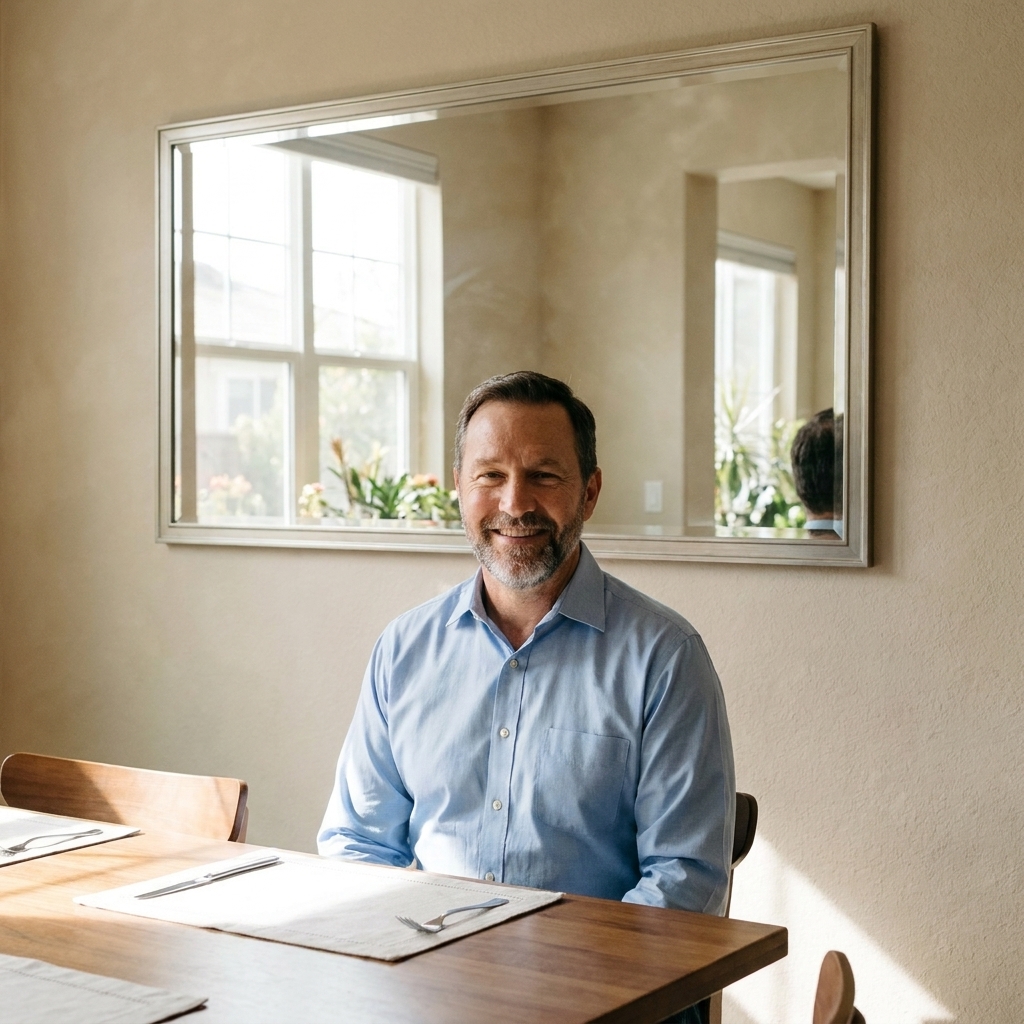
Second-best: next to the window
If there is no clear wall opposite your window, the next best strategy is to place a mirror on the wall next to the window, but slightly forward into the room.
This approach grabs side light and folds it into the space. It is especially helpful in narrow rooms where the window is at one end.
Two adjacent setups that work
- On the perpendicular wall: hang the mirror on the wall that meets the window wall at a corner. Keep it close enough that it still catches daylight, but not so tight to the trim that it mostly reflects outdoors.
- Angled leaning mirror: a tall floor mirror leaned slightly can be aimed. This is my favorite renter-friendly trick because you can adjust it by inches until the reflection hits the right spot.
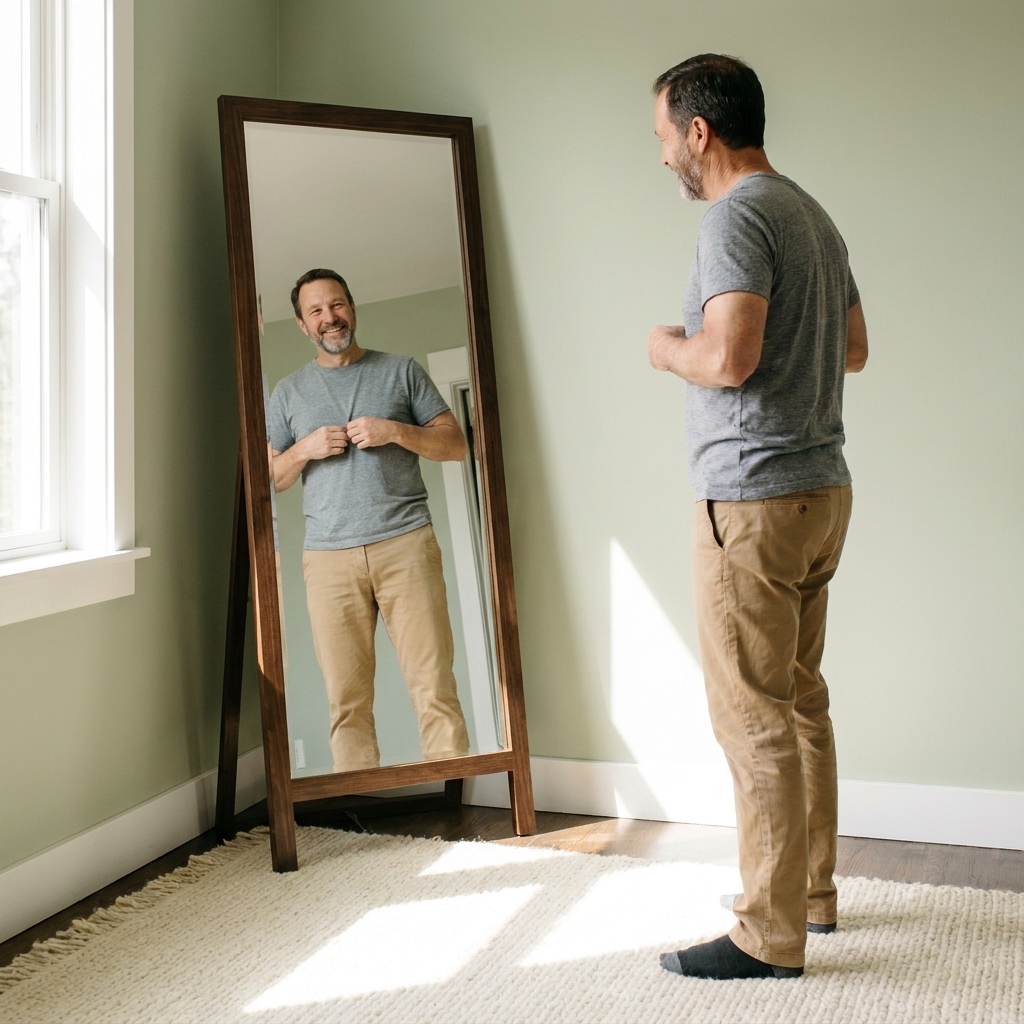
Do the “stand here” test
This is my no-drama method for getting placement right the first time.
- Stand where you want the room to feel brighter (usually the center of the seating area or the back corner).
- Hold a small mirror (even a hand mirror works) up against the wall, roughly where the big mirror would go and at about the height you plan to hang it.
- Move it left, right, up, down until you can see the window clearly in the mirror.
- Mark that general spot with painter’s tape. That is where your larger mirror will be most effective.
If you can see the window from the mirror, the mirror can “see” the window too, which means you are set.
Height and angle
Mirror height is less about eye level and more about what light it can capture.
Quick guidelines
- For wall mirrors: hang so the middle of the mirror lands roughly 50 to 60 inches from the floor in a typical room, then adjust based on what it reflects. If it mostly reflects ceiling, lower it. If it reflects dark furniture, raise it a touch.
- For tall floor mirrors: a slight lean can redirect the reflection higher and deeper. Secure it so it cannot slip or tip.
- For brightening a dark ceiling: a higher-mounted mirror can help, but only if it still catches window light, not just indoor shadows.
Glare control
Sometimes the mirror works too well. If you are catching a direct sun hotspot and bouncing it into your eyes, onto the TV, or right onto the sofa, do not give up. Just soften the aim.
- Go off-axis: move the mirror a foot or two so it reflects a bright wall or the window’s general glow instead of the sunbeam itself.
- Use sheer treatments: sheers can take the edge off harsh sun while still feeding the mirror plenty of usable daylight. If you want options that keep privacy without killing light, start with our Window Treatments guide.
- Help the bounce: a lighter, more matte wall opposite the mirror tends to read brighter and more comfortable than a dark or glossy surface that shows every glare spot.
Room-by-room moves
Living room
- Put a large mirror opposite the main window or above a console on the wall facing the window.
- If glare is an issue at certain hours, shift the mirror off-center so it reflects a bright wall instead of direct sun.
Dining room
- A mirror on the wall opposite the window can make dinner feel like it is happening in a brighter, larger space.
- If you use candles or have a chandelier, be mindful. Mirrors amplify sparkle, which can be lovely, but can also feel busy if there is already a lot going on.
Bedroom
- Use a mirror to reflect light-colored bedding or a pale wall rather than reflecting the window directly into your eyes.
- If the only workable spot faces the bed, offset it so morning light does not hit you full blast.
Hallway
- Hallways brighten dramatically when a mirror can borrow light from a nearby room. Place it where it reflects the doorway or a window at the end of the hall.
- Even a narrow mirror can help here because hallways are often light-starved.
Small bathroom
- If you already have a vanity mirror, upgrade size before adding more mirrors. Bigger glass above the sink usually beats adding a second small mirror somewhere else.
- Keep it clean. Bathroom mirrors collect haze quickly, and that film cuts reflectivity more than people realize.
Frame and finish
Most of the brightness comes from mirror area and placement, but the details can help or hurt.
- Thin or light-colored frames: steal less visual space and keep the look airy.
- Antique or heavily tinted mirrors: look great, but they reflect less light. Use them for style, not for maximum brightening.
- Multiple small mirrors: can work, but they scatter reflections. For pure light-boosting, one larger mirror is usually more effective.
Common mistakes
1) Reflecting the darkest corner
If your mirror reflects a dark sofa, a TV screen, or a shadowy corner, you are basically doubling the dimness. Fix it by shifting the mirror so it reflects the window, a bright wall, or a lighter surface.
2) Bouncing glare into your eyes
Direct sun reflection can be uncomfortable. The solution is not “no mirror.” It is better aim: move it a little off-axis so it reflects bright ambient light instead of the sun’s hotspot.
3) Hanging a mirror too high
A mirror that mostly reflects ceiling is not doing much for the lived-in part of the room. Lower it until it catches more window and more wall area.
4) Forgetting the window treatment
Heavy drapes, dark shades, and bulky valances can cut your daylight before the mirror ever gets a chance. If you are troubleshooting a dim room, take a look at your coverings. Our Window Treatments guide has a lot of low-cost ways to keep privacy without strangling the sun.
Safety and practicality
- Anchor heavy mirrors properly: use appropriate wall anchors or hit studs. If you are unsure, go one size up on hardware. Gravity is patient.
- Secure leaning mirrors: if you have kids, pets, or a bouncy floor, add an anti-tip strap or anchor point even if the mirror is just leaning.
- Keep them out of traffic lanes: a tight entryway is not the place for a fragile leaning mirror.
- Watch for heat: it is rare indoors, but a mirror reflecting strong sun onto a delicate surface can warm a spot more than you expect, especially with strong afternoon sun. If you notice a bright hot patch on wood, artwork, or upholstery, adjust.
A quick 10-minute plan
- Clean the window and the mirror you plan to use. Dust and film reduce light transmission and reflection.
- Identify the darkest area of the room where you wish it felt brighter.
- Do the stand-here test with a small mirror.
- Try opposite-the-window first. If that wall is not available, try adjacent placement.
- Adjust for comfort so the reflection is bright but not blinding.
If you want the mirror to keep doing its job, a quick wipe every week or two (more in kitchens and bathrooms) makes a bigger difference than most people expect.
If you are also shopping for curtains or shades to support that extra daylight, bookmark Measure for Curtains Before You Shop. Getting the size right helps you avoid coverage that blocks more window than you intended.
FAQ
Does a mirror have to face the window directly?
No. Facing the window gives the strongest bounce, but a slight offset can reduce glare and still brighten the room. The best placement is the one where the mirror reflects the window or a bright surface that the window lights up.
How many mirrors is too many?
If you start seeing distracting repeated reflections, you have probably gone past brighter into busy. For most rooms, one well-placed large mirror beats several small ones for natural light.
Will a mirror brighten a room with a north-facing window?
Yes, just in a different way. North light is softer and more even, so mirrors help by spreading that gentle daylight deeper into the room. You may not get dramatic sunbeams, but you can absolutely get a noticeable lift.
What if the wall opposite my window is a TV wall?
Try adjacent placement instead, or place a mirror where it reflects the bright part of the room but does not point at the screen. Mirrors and TVs can create distracting reflections if they are directly facing each other.
If you want more daylight without swapping windows, mirrors are one of the few weekend fixes that deliver immediately. Start with one mirror, put it where it can actually see the window, and fine-tune it by inches. Those small adjustments make the difference between “it looks nice” and “why does this room feel twice as bright?”
For more simple home upgrades like this, you can browse the Command Line archive.