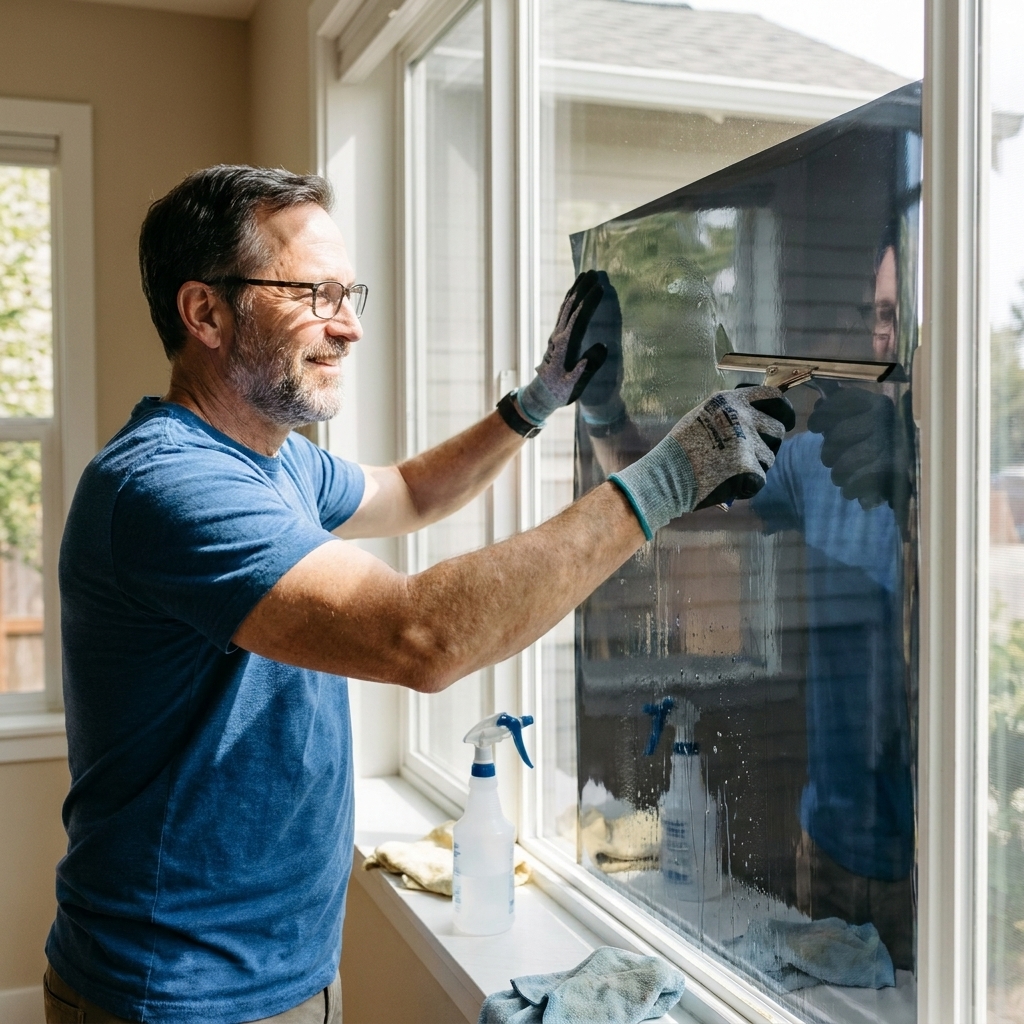

The first time I tried to “quickly” wash my second-story windows, I did what a lot of us do: I dragged a ladder out, leaned it where it seemed fine, and immediately realized I was one bad wobble away from becoming a neighborhood story. These days, I’m stubborn about one rule: if I can clean it from the ground, I do.
This guide walks you through safe, streak-free ways to clean second-story exterior windows using extension poles, magnetic cleaners, and a couple of DIY solutions that actually rinse clean. No ladder required.
Before you start: safety and setup
Cleaning glass is easy. Cleaning glass safely is the whole game. Spend two minutes on setup, and you’ll work faster and get better results.
Pick the right time
- Avoid direct, hot sun. Heat flashes your solution dry and causes streaks. Morning or late afternoon is ideal.
- Skip windy days. Wind blows overspray onto siding and fights your squeegee.
- Do not clean during freezing temps. Water can freeze on frames, sills, and walkways.
Protect what is below
- Close and lock the window (you do not want it shifting while you scrub).
- Move outdoor furniture and grills away from the drip zone.
- Lay down a towel or drop cloth if drips could stain a porch or tracked-in dirt could be an issue.
Watch for power lines
If you are using a long extension pole, look up first. Keep the pole well away from overhead power lines and service drops to the house. If there is any chance you could contact a line while lifting or swinging the pole, do not do this job from the ground.
Know when “no ladder” still means “no go”
If your second-story window is above a steep slope, landscaping rocks, a glass roof, or an area you cannot stand securely, treat it like a pro-only job. You can still use the methods below, but only if you have stable footing and enough clearance to work without reaching or leaning.
What you need for streak-free results
You can clean second-story windows with a basic kit, but the attachments matter. Here’s what I keep in my garage for regular washes.
Tools
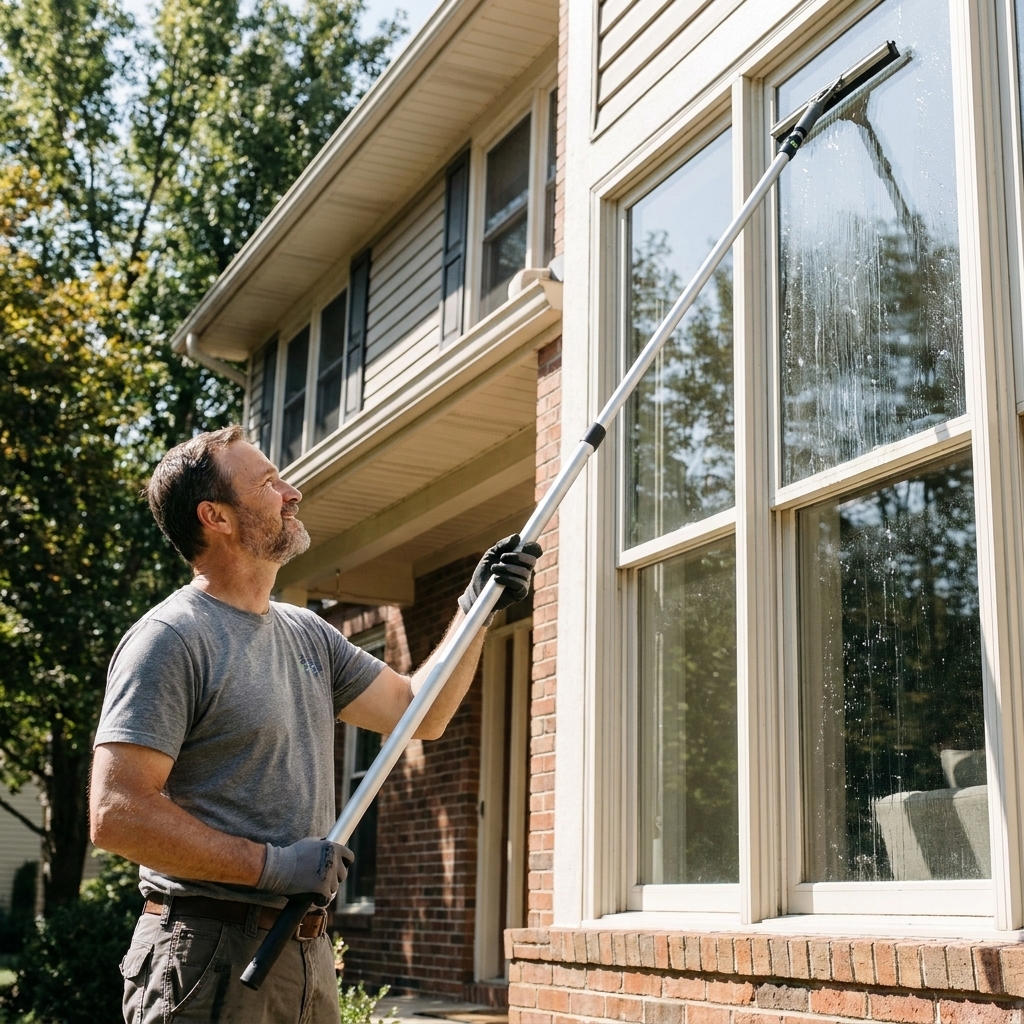
- Extension pole (a telescoping pole that locks firmly). The key is rigidity. Floppy poles make you press too hard and that leads to drips and missed spots.
- Window scrubber (microfiber “washer” sleeve) that fits onto the pole.
- Squeegee attachment sized to your pane (most common sizes work fine).
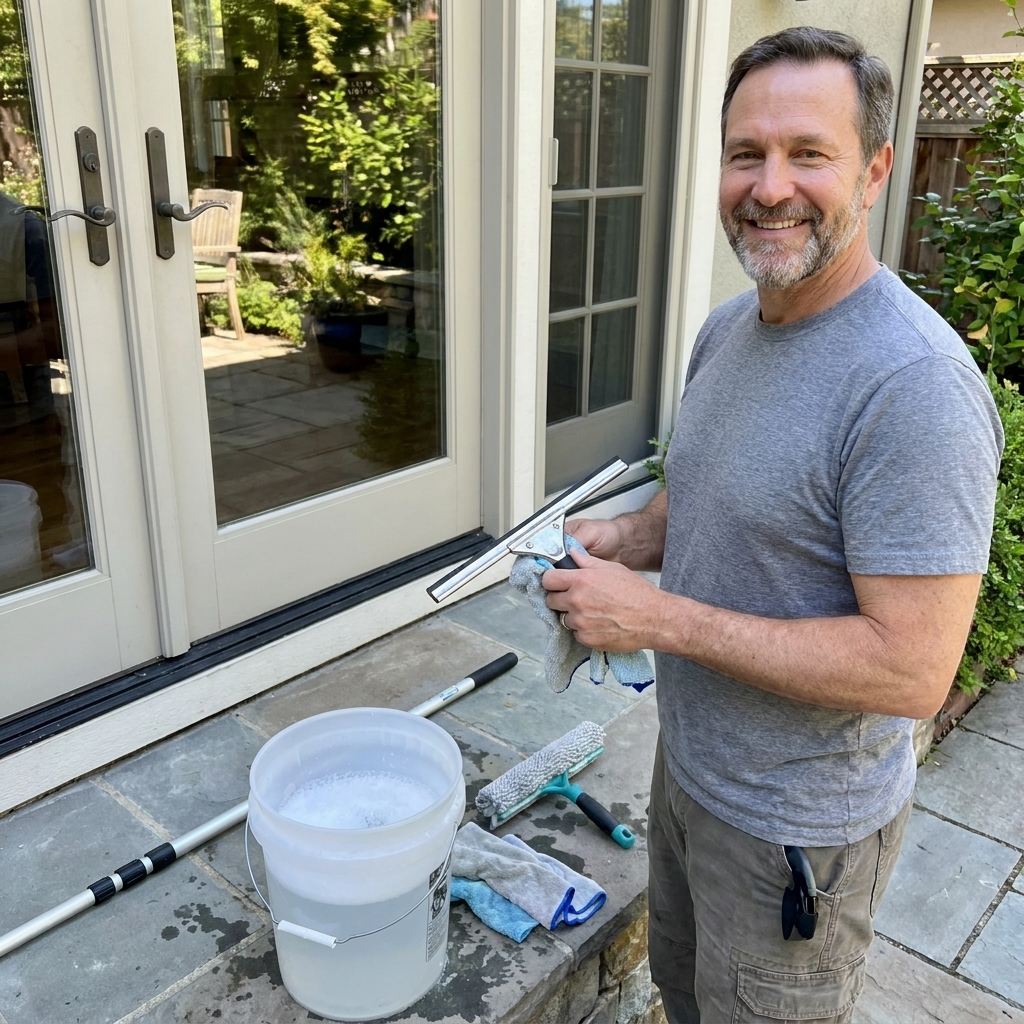
- Detail cloths (lint-free microfiber) for quick touch-ups on the bottom edge.
- Bucket or a spray bottle, depending on the method.
- Optional: a soft exterior brush for frames and insect screens.
How long of a pole?
For most two-story homes, a 12 to 24 foot telescoping pole gets you in the game, depending on your ground level and how high the window head is. A quick way to sanity-check it is to estimate the window height (ground to top of glass), then add your reach. If you have to fully extend the pole and tip-toe to touch the top edge, you are under-poled.
Cleaning solution options (simple and reliable)
Choose one. More soap is not better. Too much detergent is a streak machine.
- Everyday mix (my default): warm water + a small squirt of mild dish soap.
- Vinegar mix (great for light mineral film): equal parts water and white vinegar, plus a tiny drop of dish soap.
- Store-bought window cleaner: fine for touch-ups, but on large exterior panes it can dry too fast unless the weather is perfect.
Quick warning: Avoid abrasive pads, and be cautious with strong solvents or heavy-duty degreasers on vinyl, painted, or coated frames. Some harsher cleaners can dull finishes, discolor plastics, or leave permanent haze. When in doubt, test a small spot and rinse frames after cleaning.
Also: If you have aftermarket tint, film, or specialty coatings, check the manufacturer’s care notes before using acidic cleaners like vinegar. Most exterior glass tolerates diluted vinegar just fine, but some finishes do not.
Method 1: Extension pole scrub and squeegee
If you only use one method, make it this one. It’s the closest you can get to professional results from the ground.
Step 1: Dry-brush the loose stuff
Dust, pollen, and cobwebs turn into muddy streaks the second they get wet. Run a dry microfiber pad or soft brush over the glass and the top of the frame first.
Step 2: Wash the glass with a damp scrubber
- Dip the scrubber, then wring it out well. You want it wet, not dripping.
- Scrub in overlapping passes, paying attention to the top edge and corners where grime likes to hang on.
- For bird droppings or sap, hold the scrubber on the spot for 10 to 20 seconds to soften it, then scrub again. Let the solution do the work.
Step 3: Squeegee from top to bottom
This is where streak-free happens.
- Start at the top. Pull the squeegee down in a straight line, or use a gentle S-stroke if you are comfortable with it. On wider panes, the S-stroke often helps you avoid thin lines between passes.
- Overlap each pass slightly so you do not leave a stripe between pulls.
- Keep the rubber blade clean. Realistically, that means lowering the pole every so often to wipe the blade with a microfiber cloth, or rinsing the blade in a bucket of clean water when it starts leaving lines.
Step 4: Detail the bottom edge
The bottom gasket and sill are where drips gather. If you are using a cloth on the pole, secure it so it cannot slide off (a rubber band, a spring clamp, or a dedicated detailing pad works). Then lightly swipe the bottom edge and any last drips.
My no-streaks checklist
- Use less soap than you think.
- Keep the squeegee blade clean and nick-free.
- Do not let solution dry on the glass. Work one window at a time.
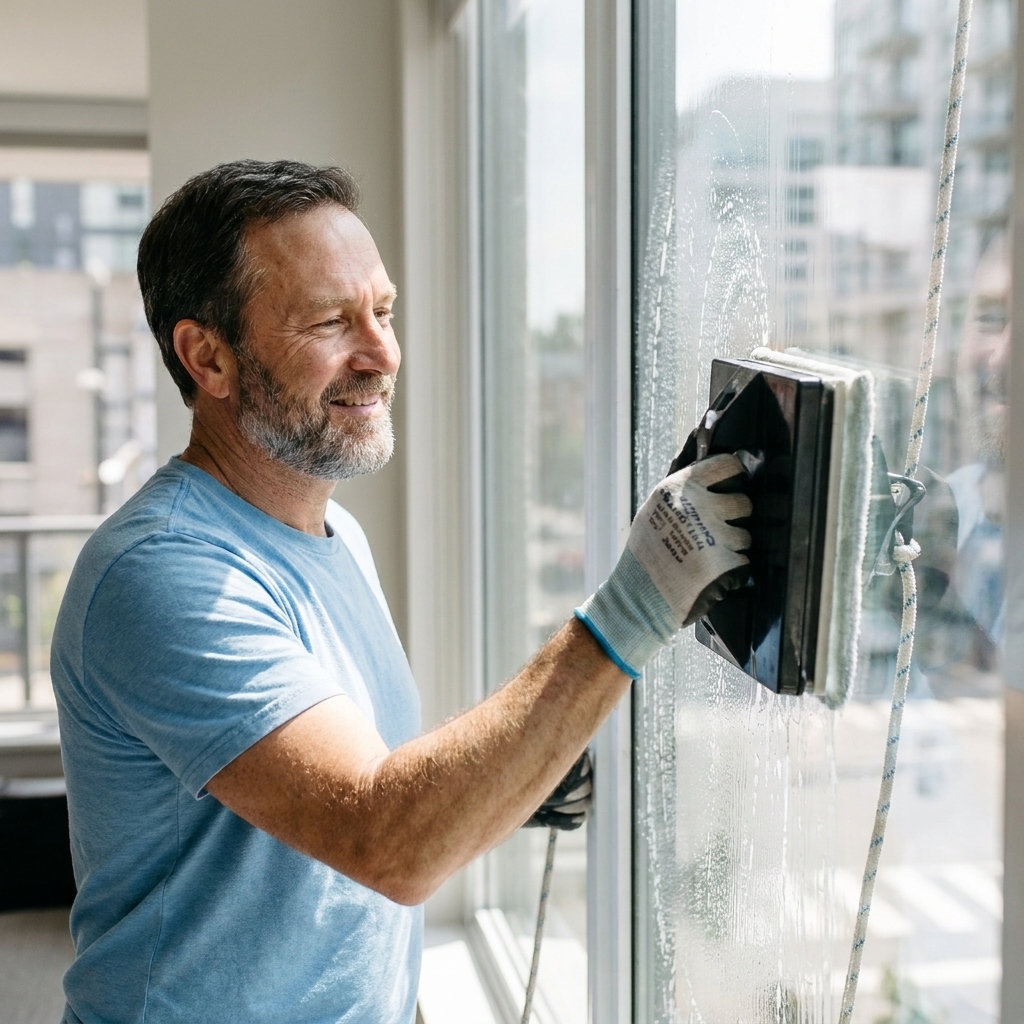
Method 2: Magnetic window cleaners
Magnetic window cleaners sound like magic: one pad outside, one inside, and you clean both at once. They can work, but only in the right situation.
When they make sense
- You have single-pane glass or thinner glass where the magnet strength can actually couple through.
- The window opens inward and you can safely control the inside half without overreaching.
- You want a maintenance clean between deeper washes.
When to skip them
- Many double-pane insulated windows are too thick for basic magnetic units to hold securely. Some models are rated for specific thickness ranges, so check your tool’s rating against your glass.
- If the outside surface is gritty or sandy. Dragging grit under a magnetic pad can scratch glass.
- If you cannot retrieve the outer piece safely if it disconnects.
Tips if you use one
- Rinse dust off first with a light mist of water from a spray bottle (from inside, if possible) before you start sliding pads around.
- Use a slicker solution (water with a tiny drop of dish soap) so it glides without chatter.
- Work slow near edges and seals. That’s where magnets tend to slip.
Bottom line: I treat magnetic cleaners as a specialty tool. For truly streak-free second-story work, the pole-and-squeegee method usually wins.
Method 3: Hose and rinse
If your goal is “cleaner than it was” and you have a lot of glass to cover, rinsing systems can help. Just be honest about your water quality.
What works
- Pre-rinse to knock off pollen and grit.
- Use a light soap through a sprayer if your siding and landscaping can handle overspray.
- Final rinse thoroughly so residue does not dry on the pane.
What causes spots
Most outdoor “mystery spots” are minerals in water drying on the glass. If you have hard water, a hose-only finish can look worse than before.
An upgrade for hard water areas
If your tap water leaves spots on your car, it will leave spots on your windows too. A pure-water approach (deionized or filtered rinse water) can reduce mineral spotting a lot, but it is still not a free pass. You still need a gentle pre-rinse to clear grit, and you may still prefer a quick squeegee finish on problem panes.
Best use case
I like this approach as a pre-clean: rinse first, then do a quick scrub-and-squeegee. The rinse step makes your contact cleaning smoother and reduces scratching risk.
Screens, frames, and tracks
Even perfectly cleaned glass looks bad if the screen is dusty or the frame is streaked. I do these in this order:
1) Screens
- If removable, take them down and gently wash with mild soap and water, then air dry.
- If you cannot remove them easily, vacuum with a brush attachment, then wipe with a damp microfiber.
2) Frames and sills
- Wipe with mild soapy water first.
- Rinse with a clean damp cloth so soap does not dry into lines.
3) Tracks (if accessible from inside)
- Vacuum grit.
- Wipe with a damp cloth. Avoid flooding tracks with water.
If you are dealing with drafts or condensation while you are up close with the frames, our Window DIY section has more practical maintenance guides.
Streaks and spots: fixes
Streaks that show up after it dries
- Too much soap: remake your bucket with less detergent and re-squeegee.
- Cleaning in sun or heat: work smaller sections, keep the glass wet, and squeegee immediately.
- Dirty squeegee blade: wipe the blade when you lower the pole, or rinse it often.
Dots or freckling after cleaning
- Hard water minerals: try the vinegar mix, let it dwell briefly, then scrub and squeegee.
- Sprinkler overspray: adjust sprinklers if possible. Frequent misting bakes minerals onto glass.
Hazy film that never seems to go away
- Oxidation from older screens or frames can transfer onto glass. Clean the frame and screen thoroughly first, then re-clean the glass.
- Worn seals or failed insulated units can cause haze between panes. If the fogging is inside the glass unit, cleaning will not fix it. That’s a replacement issue.
My ladder-free routine
If you want the simplest plan that still looks great, here’s my go-to order:
- Pick a cloudy, calm time of day.
- Dry-brush the window to remove grit.
- Scrub with lightly soapy water using an extension pole.
- Squeegee top-to-bottom, overlapping passes.
- Lower the pole, wipe the blade as needed, and detail the bottom edge and frame.
I do it twice a year. Once in spring when pollen backs off, and once in early fall before I’m staring at dirty glass all winter.
FAQ
Can I clean second-story windows without any special tools?
You can improve them with a hose rinse, but for truly streak-free results you need something that lets you scrub and then squeegee. A basic extension pole with attachments is the most practical upgrade.
Is it safe to use vinegar on windows?
On typical exterior glass, diluted white vinegar is generally fine and helpful for light mineral spotting. Keep it off natural stone sills and rinse frames after cleaning so you do not leave acidic residue sitting on finishes. If your window has specialty coatings or aftermarket film, follow the manufacturer’s care guidance.
Do I need to remove screens?
If your screens pop out easily, yes. It makes everything faster and cleaner. If they are fixed or awkward, at least vacuum and wipe them so you are not washing dust onto freshly cleaned glass.
What if the window tilts in for cleaning?
If your window is designed to tilt in, use that feature. It is the safest built-in ladder replacement you have. Clean the exterior face from inside, then lock everything back securely when you are done.
If you are mapping out other home projects and want a plainspoken starting point, visit the Command Line guide hub.