

I used to think “thermal curtains” were mostly marketing until my old split-level taught me a winter lesson: glass gets cold fast, and a cold window surface can make a room feel cold even when the thermostat is trying its best. The first time I hung a properly sized thermal panel tight to the wall, the room stopped feeling like it had its own weather system.
So yes, thermal insulated curtains can lower winter heating bills. But the keyword is “can.” It depends on what kind of heat loss you are dealing with (drafts vs. cold glass), how you hang them, and whether your windows are already doing a decent job.
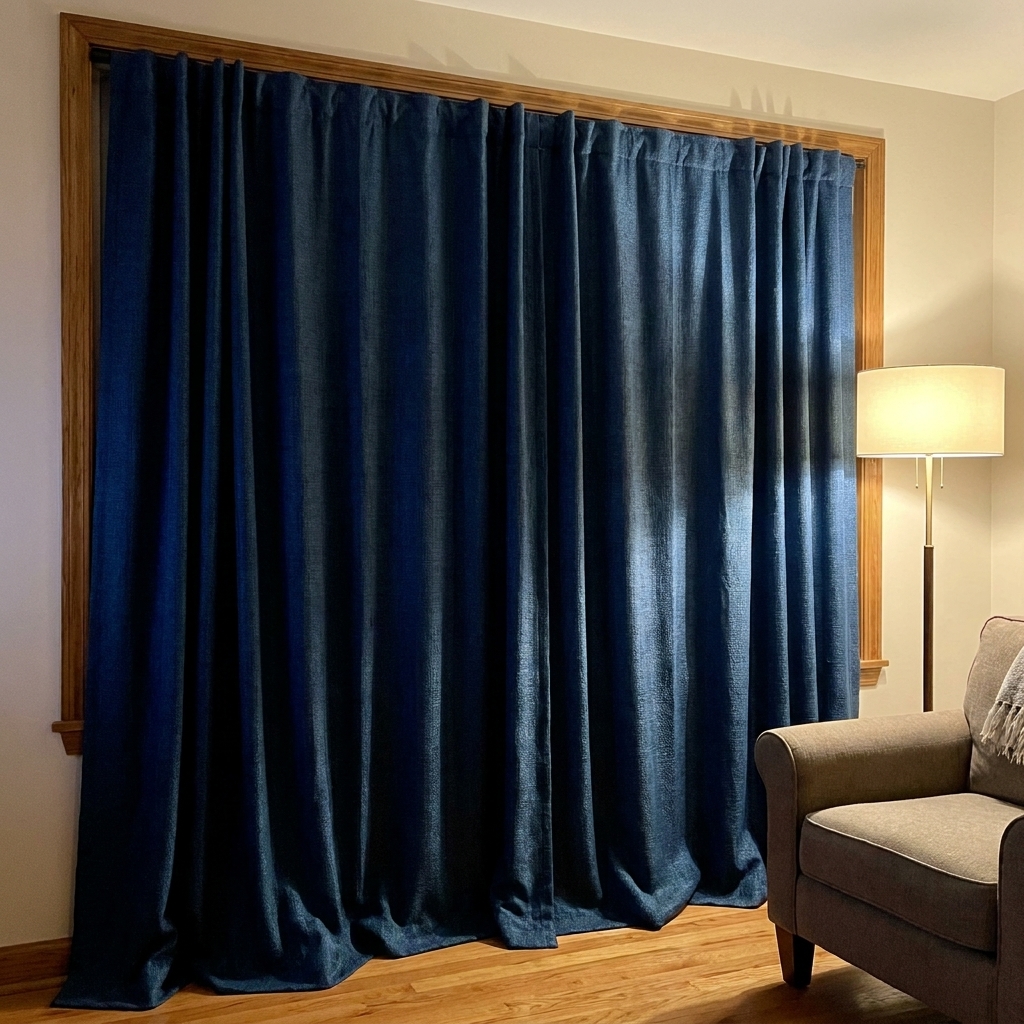
What thermal curtains do
There are a few ways your house loses heat at windows. Thermal curtains help with most of them, but not equally.
1) Convection: slowing the cold-air loop
When warm indoor air hits cold glass, it cools, becomes denser, and falls. That falling cooler air pulls more warm air toward the window, and you feel a chilly “draft” even if the window is not leaking air. A curtain creates a calmer air pocket between the fabric and the glass, which reduces that loop.
2) Conduction: adding a modest insulation layer
Heat naturally moves from warm to cold. Curtains add a modest layer of insulation (mostly still air trapped in fabric and lining) that slows the rate of heat transfer. They are not a substitute for a high-performance window, but they can reduce how hard your furnace has to work at night.
3) Radiant comfort: why the room feels colder near glass
This is the one people notice first. Even if the air temperature is fine, a cold window lowers your mean radiant temperature, which can make your body feel chilled. Thermal curtains raise the “surface temperature” your body is facing, so the space feels more comfortable.
4) Air leakage: reducing movement, not magically sealing leaks
If you have true drafts, standard curtains mostly reduce the feeling of that airflow by slowing air movement near the window. Only a more “air barrier” style setup (track near the ceiling, a top seal, and side closures like magnets or hook-and-loop) starts to approach meaningful draft-blocking performance.
If your issue is serious drafts, pair curtains with basic sealing first. See weatherstripping vs. caulking for drafty windows for a practical starting point.
What “thermal” means
Thermal curtains are usually standard drapery panels with a lining designed to reduce heat transfer. The lining might be a dense flannel-like layer, a foam-like layer, or a multi-layer construction. The exact materials vary, but a few shopping rules stay consistent.
Look for these features
- Multiple layers: A face fabric plus a lining (or two) generally performs better than a single thick fabric.
- Tight weave and weight: Heavier and less porous panels reduce air movement.
- Full-length panels: Curtains that reach the floor, or at least the sill with a clean seal, are far more effective.
- Wide coverage: You want overlap beyond the trim, not “perfectly window-sized.”
Be cautious with these claims
- “Blackout” is not automatically “thermal.” Many blackout curtains help a bit, but some are mainly for light control.
- R-value numbers on curtains: Sometimes legitimate, often vague. Your real-world result depends more on coverage and gap control than a single spec.
Before you buy, get the sizing right. A lot of “thermal curtains don’t work” stories are really “my panels are too narrow.” This quick guide helps: measure for curtains before you shop.
How much can they save?
Real savings depend on your climate, energy prices, window quality, and your habits. In a leaky, older home, thermal curtains can make a noticeable dent because they reduce comfort-driven thermostat bumps. In a newer home with decent windows, savings may be modest, but comfort can still improve.
My rule of thumb
If a room feels drafty or you feel cold radiating off the glass, thermal curtains usually pay you back in comfort first, and dollars second. It is hard to pin down a universal dollar figure without making up numbers for your utility rate and square footage. What I can tell you confidently:
- If you currently avoid certain rooms in winter, thermal curtains can make those spaces usable again.
- If you raise the thermostat because you feel chilled near windows, properly hung thermal curtains can help you keep the setting lower.
- If your windows are already high performance and well sealed, thermal curtains are more about comfort and nighttime temperature stability than big bill reductions.
For a bigger-picture look at cost and payback when the windows themselves are the weak link, read the true cost of window replacement.
Hang them for performance
This is where most “thermal curtains don’t work” stories come from. The fabric can be great, but the install leaves gaps that behave like open windows.
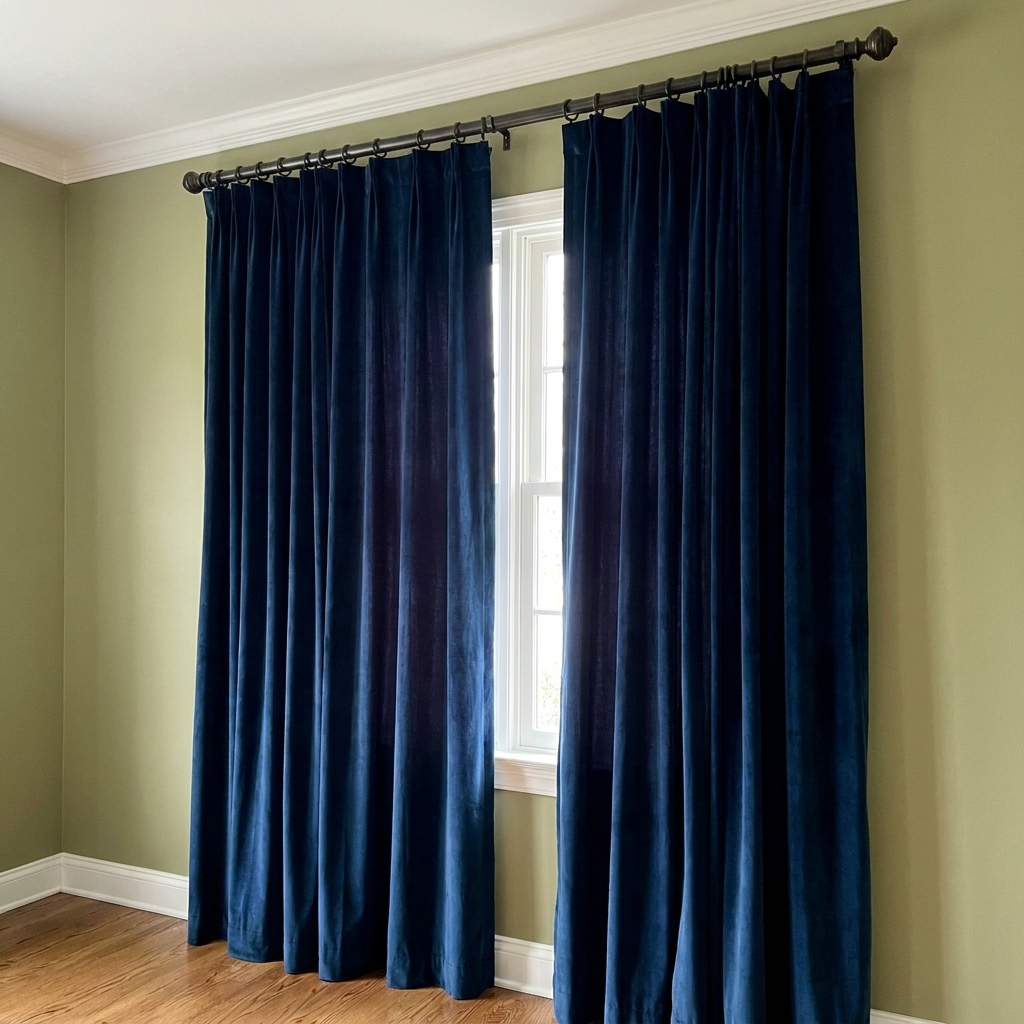
Step 1: Mount the rod high and wide
- High: Mount several inches above the window trim, or close to the ceiling if you can. This reduces the amount of warm room air that can circulate behind the curtain and wash over the cold glass.
- Wide: Extend the rod so the curtain can overlap the wall on both sides when closed. Aim for several inches of overlap per side at minimum.
If rod mounting is what is stopping you, I have a dedicated guide: how to hang heavy drapery rods in drywall without a stud.
Step 2: Use enough fullness
A flat, stretched-tight panel looks sleek but performs worse. You want folds. As a baseline, total curtain width should be about 2x the window width (combined across both panels). More fullness generally seals better and reduces air movement through the fabric.
Step 3: Block the top gap
The top gap is often one of the biggest “curtains are closed, but it still feels cold” problems because it lets warm air rise behind the drape and fall back into the room in a loop. Options, from simplest to most effective:
- Choose grommet-free headers: Rod pockets or back tabs can reduce the open holes you get with grommets.
- Add a cornice or valance: Even a simple wood box wrapped in fabric can block that chimney effect at the top.
- Use ceiling track: Tracks can get you closer to the ceiling with fewer gaps.
Step 4: Get the bottom right
- Best: Curtains that lightly “kiss” the floor create a soft seal.
- Also good: Curtains that end at the sill can work if they seal the sides and top well, but they usually leak more.
- Avoid: Curtains that stop several inches above the floor in a drafty room.
Step 5: Close the side gaps on cold nights
If you want maximum performance, treat curtains like a loose air barrier and close the edges:
- Magnetic tape or discreet hook-and-loop strips at the outer edges can pull curtains toward the wall.
- Holdbacks are great for daylight, but remove them and let panels fully relax into place at night.
Common mistakes
- Buying panels that are too narrow (no overlap on the wall).
- Hanging the rod right at the trim and leaving a big top gap.
- Using grommet tops that leave obvious holes at the header.
- Stopping short at the bottom in a room you already know is drafty.
- Leaving curtains pinned back at night and wondering why the room feels cold.
Curtains vs. other fixes
Thermal curtains are one tool. Here is how I think about the stack, from quickest win to bigger commitment.
If you feel a draft
- First: Weatherstrip the sash and address obvious gaps. Start with weatherstripping vs. caulking.
- Then: Thermal curtains to reduce the remaining cold-air movement and improve comfort.
If the room feels cold near the glass, but you cannot find a draft
- First: Thermal curtains (installed high, wide, and with gaps controlled).
- Also consider: Cellular shades under curtains for an extra still-air layer.
If you have condensation
Be careful. Heavy curtains can make condensation worse because they keep the glass colder and reduce air circulation at the window. If you regularly see moisture, read why windows sweat in winter and how to stop it. You may need better humidity control or targeted air sealing before you wrap the window in thick fabric every night.
If the windows are failing
Fogging between panes, rotting frames, or persistent drafts that no amount of sealing fixes usually means the window is the problem. See 7 signs it’s time to replace your home’s windows.
When they are worth it
I like to frame ROI in two buckets: comfort ROI and utility-bill ROI. Thermal curtains often win on comfort even when payback in dollars is slow.
They are a smart buy when
- You rent, or you are not ready to replace windows yet.
- You have rooms with large glass areas that feel cold at night.
- You heat with electric resistance or propane where each degree of thermostat setting costs more.
- You can commit to actually closing them on cold nights and opening them when the sun is helpful.
They are a slower payback when
- You forget to close them consistently.
- Your windows are already efficient and well sealed.
- You buy panels that are too short or too narrow, which is the most common “wasted money” scenario.
How to use them daily
- Night: Close them fully, making sure edges overlap the wall and the bottom sits against the floor or sill.
- Sunny winter days: Open curtains on south-facing windows to grab free heat, then close them before dusk.
- Cloudy days: Keep them closed in the coldest rooms if comfort is the priority.
If you are also trying to brighten up a dim space, pair your curtain plan with strategic mirror placement for more natural light.
Quick FAQ
Do thermal curtains work without blinds?
Yes. They work best when they can cover the trim and reduce gaps to create a still-air pocket. Blinds or shades can add another layer, but they are not required.
Are thermal curtains safe near baseboard heaters?
Be conservative here. Follow the heater manufacturer’s clearance guidance, and do not let fabric drape over or touch a heater. If you rely on a baseboard heater under a window, consider a shorter treatment or a setup that does not block airflow.
Will they stop drafts completely?
They can reduce the feeling of drafts, but if air is leaking through gaps in the window assembly, you will get better results by sealing first, then using curtains as the final comfort layer.
What is better: thermal curtains or plastic window film?
Film can be very effective at cutting air leakage when installed well, but it is seasonal and less convenient. Curtains are reusable and add comfort daily. In really drafty rooms, using both can be a strong combo.
My bottom line
Thermal insulated curtains can lower winter heating bills, but they are not magic fabric. Think of them as a removable insulation layer that works only as well as the coverage and gap control you create around the window.
If you hang them high and wide, use enough fullness, and block the top and side gaps, you will usually feel the difference immediately. And in an old-house winter, that comfort is often what keeps you from cranking the thermostat in the first place.
For more projects like this, browse the Window Treatments guide.