

I learned the hard way that “bathroom humidity” is not the same as “a little moisture.” In my old 1970s split-level, the hall bath had a shower fan that sounded like a tired lawn mower and moved about as much air. Anything fabric near that window stayed damp, and anything wood nearby eventually told on itself with warping, swelling, or that faint mildew smell that never fully leaves.
The good news is you do not have to choose between privacy and durability. The best bathroom window treatments are made from materials that simply do not care much about steam: faux wood (the right kind), vinyl, composite, aluminum, and performance synthetics. Below is how I’d pick them today, what to avoid, and what to check before you buy.

What makes a treatment bathroom-proof
Marketing terms like “moisture resistant” get thrown around a lot. In a humid bathroom, you want materials that are low-absorbent, dimensionally stable, and easy to wipe clean. Here are the traits that matter in real life:
- Low-absorbent surfaces: Vinyl, PVC, aluminum, and many coated synthetics generally do not absorb water the way real wood and fabric do.
- Mildew resistance: Smooth surfaces with fewer seams and fabric folds give mildew fewer places to start. (Even “bathroom-safe” products can grow funk on soap film, so cleaning and ventilation still matter.)
- Hardware that resists corrosion: Stainless is great, but not always common. Look for corrosion-resistant components such as powder-coated metal, aluminum hardware, and quality finishes on brackets, pins, and screws.
- Easy cleaning: In a bathroom, you should be able to clean with mild soap and water without damaging the finish.
One quick definition that clears up a lot of shopping confusion: PVC faux wood is typically a solid or hollow PVC slat. Composite products usually blend engineered materials and a tough coating for a heavier, more solid feel.
If your bathroom window regularly drips or “sweats” in winter, it is worth addressing that too. Window condensation can keep surfaces wet long after the shower ends. I break down the causes and fixes here: Why windows sweat in winter and how to stop it.
Top picks for humid bathrooms
1) Faux wood blinds (PVC or composite)
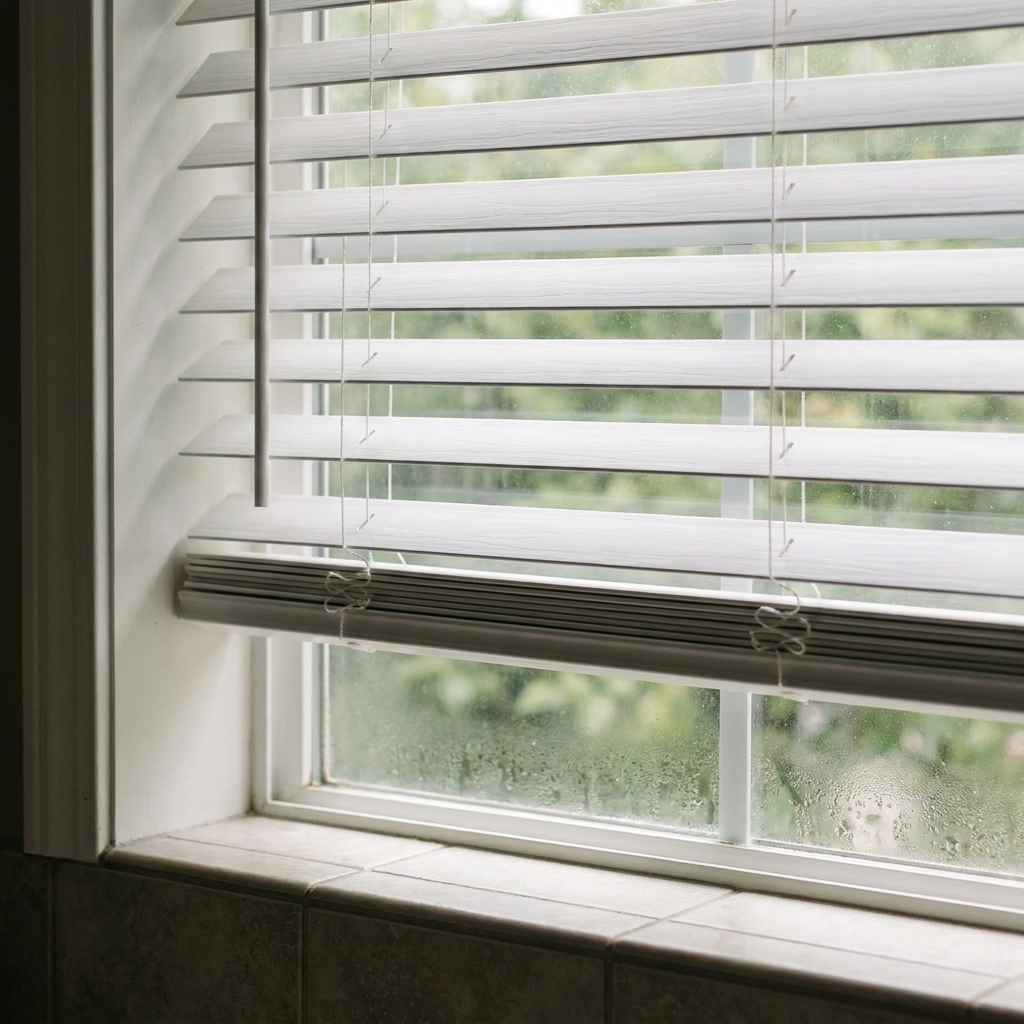
If you want the look of wood but need something that can take daily showers, faux wood blinds are the sweet spot. The key is choosing the right type of faux wood:
- Best: PVC faux wood or high-quality composites designed for wet areas.
- Skip: “Faux wood” that is actually a wood core wrapped in a thin coating. If water finds a seam, the core can swell.
Why they work: They are rigid, wipeable, and offer excellent privacy control. You can tilt the slats to bounce daylight up while blocking the direct view.
Trevor’s buying tips:
- Choose cordless lift when you can. It is cleaner looking, less gunk-prone, and safer for kids and pets.
- Go with a quality headrail. Cheap headrails are where rust and rough operation show up first.
- If your window is inside the shower splash zone, consider a different option. Even PVC blinds can become a soap-scum magnet.
2) Vinyl shutters (plantation or café)
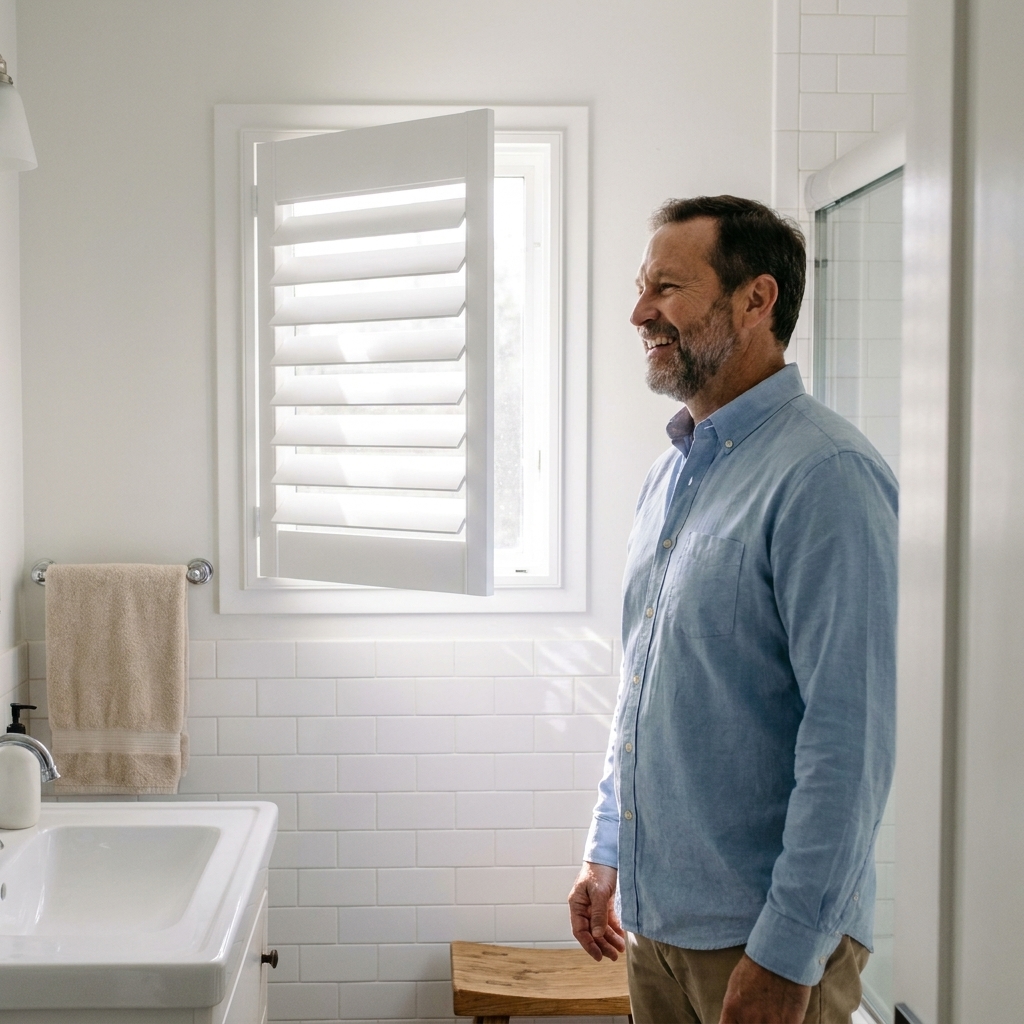
Vinyl shutters are one of the most durable choices for bathrooms, especially when the window is near a tub or shower. They look built-in, stand up to repeated moisture, and have fewer flexible parts than blinds.
Why they work: Vinyl is non-porous and easy to wipe down. Shutters also create a cleaner silhouette than blinds, which is nice in small bathrooms where visual clutter builds fast.
Where they shine:
- Café shutters cover the lower half of the window for privacy while leaving the top open for daylight.
- Full-height shutters give maximum privacy and a tidy look, especially on street-facing bathrooms.
Watch-outs: Vinyl can flex on very wide spans. Common ways makers deal with this include a mid-rail, a T-post, or beefier frames and louvers, depending on the window size.
3) Composite shutters (more solid feel)
Composite shutters typically blend engineered materials and a durable coating. Many lines are designed specifically for humid rooms, offering a heavier, sturdier feel than hollow vinyl.
Why they work: They tend to resist warping better than natural wood and feel more substantial than lightweight vinyl, which can matter if the shutter panels are large.
My take: If you love the shutter look and plan to stay in the home, composite is often the “buy once, cry once” upgrade.
4) Wipeable roller shades (vinyl or performance fabric)
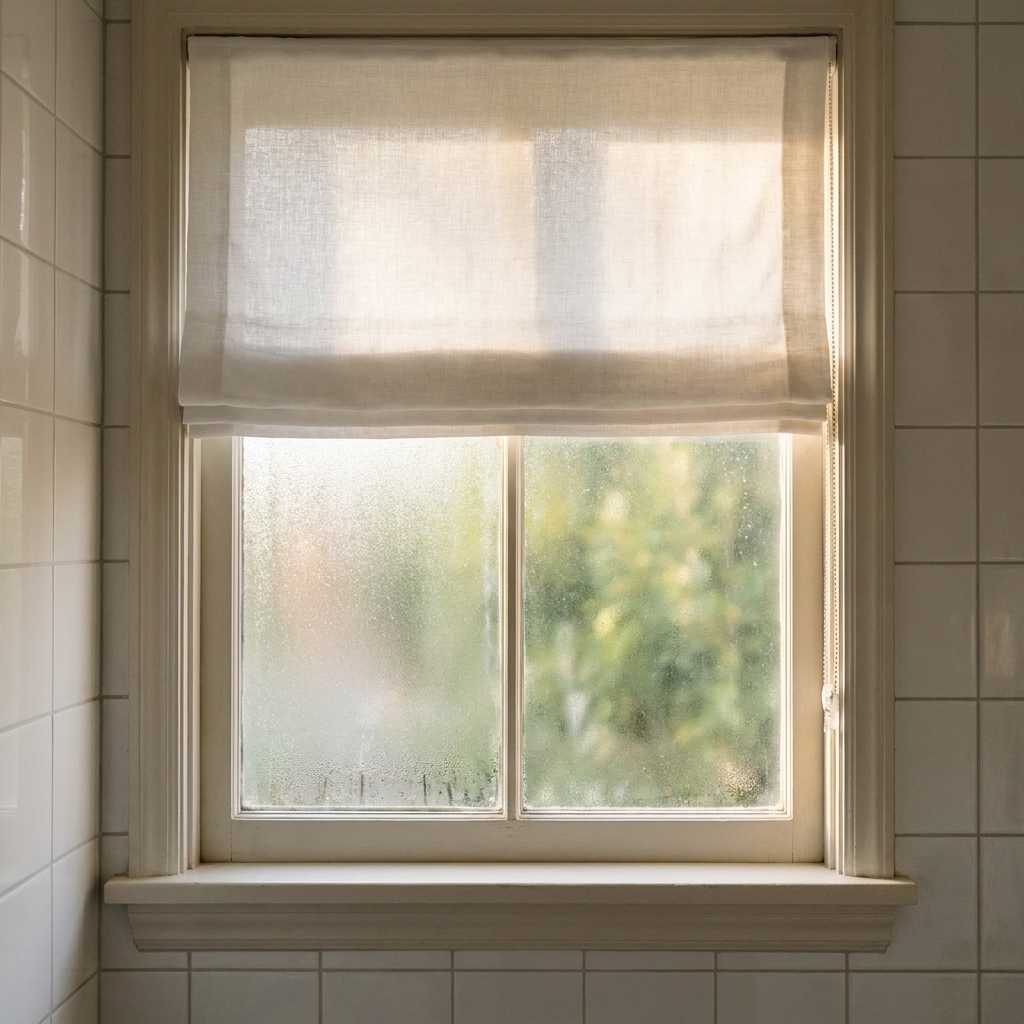
A roller shade is the cleanest option visually and one of the easiest to keep clean, as long as you choose a truly wipeable material. Look for shade materials described as vinyl, PVC, or a performance fabric specifically rated for high humidity and wipe-down cleaning.
Why they work: Minimal folds means fewer places for moisture and grime to hang out. They are also great for narrow windows where blinds look busy.
Two smart upgrades:
- Dual-layer (zebra) shades: If you like the roller look but want finer light control, some dual-layer options are available in moisture-friendly materials.
- Light-filtering vs blackout: Light-filtering is usually plenty for bathrooms, unless the window faces a bright security light at night.
If you specifically want top-down privacy, that feature is more common in top-down/bottom-up cellular or pleated shades. Just make sure the exact product line is rated for bathrooms before you assume it will hold up.
5) Aluminum mini blinds (budget-friendly)
Aluminum mini blinds are not glamorous, but they are reliably moisture-tolerant and inexpensive. If you are outfitting a rental, a kids’ bath, or a basement bathroom, they can be a practical choice.
Why they work: Aluminum will not warp like wood. The main issue is not humidity, it is bent slats and cheap hardware.
Watch-outs: Look for corrosion-resistant components and be gentle when cleaning so you do not kink the slats.
What to avoid
- Real wood blinds: Even well-finished wood can swell, cup, or crack with repeated steam.
- Standard fabric curtains near the shower: Fabric holds moisture and can mildew quickly unless it is removed and washed regularly.
- Bamboo and woven wood shades: They look great, but the natural fibers can absorb humidity and are hard to clean thoroughly.
- Dry-room cellular shades: Some are fine, but many fabrics and internal cells can trap moisture and stain. If you go cellular, confirm it is rated for high-humidity areas.
Privacy and light pairing
Bathrooms are all about balancing privacy and daylight. Here is how I typically match treatments to the window and the situation:
- Street-facing window: Vinyl or composite shutters (café or full height) for privacy without making the room feel closed in.
- Window in the shower zone: Vinyl shutters or a wipeable roller shade. If the glass is already frosted or obscured, sometimes the best move is no treatment at all so there is nothing to mildew.
- Small, high window: Faux wood blinds or a roller shade. Keep it simple so cleaning is easy.
- Bathroom that feels dark: Lighter colors, wider slats, or shutters with louvers. You can also boost daylight with placement tricks from this guide: Strategic mirror placement for more natural light.
Install tips for bathrooms
Mount choice: inside vs outside
Inside mount looks clean, but it puts hardware closer to steam and condensation on the glass. Outside mount can reduce edge gaps for privacy and keeps brackets a bit farther from moisture if the window frame gets wet.
Do a clearance check first
Before you commit, open the window and look for anything that could interfere: a crank handle, a latch, a deep sill, or trim that is not square. You want the treatment to operate without rubbing, and you still want to be able to open the window for quick venting.
Skip the “just wipe it” mindset
Even moisture-proof materials get gross if they are never cleaned. A simple routine works:
- After showers, run the fan and crack the door. This does more than any mildew-resistant label.
- Once a week, wipe slats or shutters with a microfiber cloth lightly dampened with warm water and a drop of dish soap.
- Dry with a clean cloth, especially around louvers, tilt rods, and bottom rails.
Control humidity at the source
If your bathroom stays damp for hours, window treatments will always be fighting a losing battle. Make sure your fan actually vents outdoors and runs long enough. If your window is drafty, that can also encourage condensation and cold surfaces. This guide can help you tighten things up: Weatherstripping vs caulking for drafty windows.
Frequently asked questions
Are faux wood blinds okay in a bathroom?
Yes, as long as they are PVC or a composite rated for humid areas. Avoid any product with a wood core. In a very wet location like inside a shower enclosure, shutters or a wipeable roller shade usually hold up better and clean easier.
What is the most mildew-resistant option?
Vinyl or composite shutters are hard to beat because they have fewer soft parts and fewer places for mildew to hide. A smooth, wipeable roller shade material is also excellent, but it still needs occasional cleaning to remove soap film and dust.
Can I use a regular curtain in a bathroom?
You can, but plan on frequent washing and choose a washable synthetic fabric. In truly humid bathrooms, curtains are often the first thing to smell musty because they dry slowly and trap moisture in folds.
What if I need privacy but still want light?
Look at café shutters, moisture-rated shades that allow partial coverage, or faux wood blinds tilted upward. If the glass itself is the privacy weak link, consider a film instead of a heavier window treatment. This walkthrough is a good starting point: Installing frosted window privacy film.
My simple recommendation
If you want the shortest path to “set it and forget it,” I would choose vinyl or composite shutters for most bathrooms, especially if the window is near the shower. If you want a lower-cost option that still looks sharp, PVC faux wood blinds are the best balance of price, privacy control, and wipe-down cleaning. For a minimalist look with quick cleaning, a wipeable, humidity-rated roller shade is hard to argue with.
Pick the material that matches how wet your bathroom actually gets, then make sure your ventilation is doing its job. The right window treatment lasts a lot longer when it is not being asked to fix a humidity problem by itself.