

I grew up holding a flashlight for my grandpa while he “just took a quick look” at a window that was sticking or leaking. Those quick looks taught me something that still holds true: windows rarely fail in just one way. Sometimes the sash is the problem. Other times, the real trouble is hiding in the frame, the sill, or the flashing behind the trim.
That is exactly why the insert vs. full-frame decision matters. Both methods can get you a tighter, quieter, easier-to-use window, but they solve different problems. Below is how I explain it to neighbors when they are trying to choose without getting buried in contractor jargon.

Two methods, one goal
Insert replacement (also called pocket replacement)
An insert replacement keeps your existing window frame in place. The old sashes come out, and a new “window unit” gets installed inside the existing frame. Interior trim usually stays. Exterior trim often stays too, depending on the system and the condition of the opening.
Think of it like swapping the moving parts and the glass while keeping the original picture frame on the wall.
Full-frame replacement
A full-frame replacement removes the entire window, including the frame. In many cases, that means removing some interior trim and exterior trim or siding around the window so the installer can tie into the wall correctly with flashing and water management.
Think of it like removing the picture frame and fixing the wall behind it before you hang a new one.
What changes with each option
| Factor | Insert replacement | Full-frame replacement |
|---|---|---|
| What gets removed | Old sashes and sometimes interior stops (the thin trim strips that hold the sash in place) | Entire window unit, typically back to the rough opening (details vary by wall type) |
| Trim disturbance | Usually minimal | Often requires trim removal and rework |
| Chance to address rot, flashing, insulation gaps | Limited | High |
| Glass area | Commonly slightly reduced | Can maximize glass, depending on design |
| Best for | Sound existing frames and stable openings | Damaged frames, water issues, out-of-square openings, remodels |
How to tell what your home needs
When insert replacement is usually the right call
- Your existing frames are solid. No soft wood, no chronic water staining, no obvious rot at the sill or lower corners.
- The window opening is still square enough. A little out of level is common in older homes, but big racking or gaps can make inserts harder to fit well.
- You want less disruption indoors. If you have nice interior casing you do not want to disturb, inserts can be a gentler option.
- Your main goal is comfort and usability. Draft reduction, smoother operation, better locks, easier cleaning, and better glass are all realistic wins with inserts.
When full-frame replacement is the better tool
- You see rot or suspect hidden water damage. If the sill feels spongy, paint keeps bubbling, or the lower corners are punky, you want full access.
- There are signs of water management problems. Staining on drywall at the corners, recurring sealant failures outside, or wet trim after storms can indicate movement, poor adhesion, or water getting behind the trim. Any of those is worth investigating flashing and how the window ties into the wall.
- You are changing the window size or style. Going from a double-hung to a casement, adding egress, resizing for a remodel, or correcting an oddly sized or altered opening typically points to full-frame.
- Energy issues are coming from around the window, not through it. Big air leaks at the perimeter, missing insulation, or an old aluminum frame that sweats may be better addressed with full-frame work, especially when the new window has a real thermal break and the opening can be air-sealed correctly. Keep in mind that condensation is also driven by indoor humidity and ventilation.
If you are dealing with drafts specifically, it is worth reading Weatherstripping vs. caulking for drafty windows first. Sometimes the “replacement decision” is really a sealing and maintenance decision.
Cost: what drives the difference
Once you know which problems you are trying to solve, pricing makes a lot more sense. You are not just buying a window. You are buying access to what is behind it and the time it takes to rebuild everything neatly.
Inserts are often cheaper because they are faster to install and typically require less finish carpentry. Full-frame replacements cost more because there is more demolition, more material, more labor, and more time spent rebuilding trim and properly flashing and sealing the opening.
Typical cost influencers for both methods
- Window type: picture windows and basic double-hungs are usually less than large casements, bays, bows, or specialty shapes.
- Materials: vinyl, fiberglass, wood, and clad wood all price differently, and upgrades like laminated glass or thicker frames can add cost.
- Access: second-story work, steep landscaping, or tricky exterior finishes raise labor time.
- Finish work: stained wood trim, custom casing, plaster repair, and paint matching can be the quiet budget killer.
My practical advice: when you get quotes, ask for the cost broken into (1) the window unit, (2) installation labor, and (3) finish carpentry and exterior repairs. That makes it much easier to compare apples to apples.
Moisture and structure
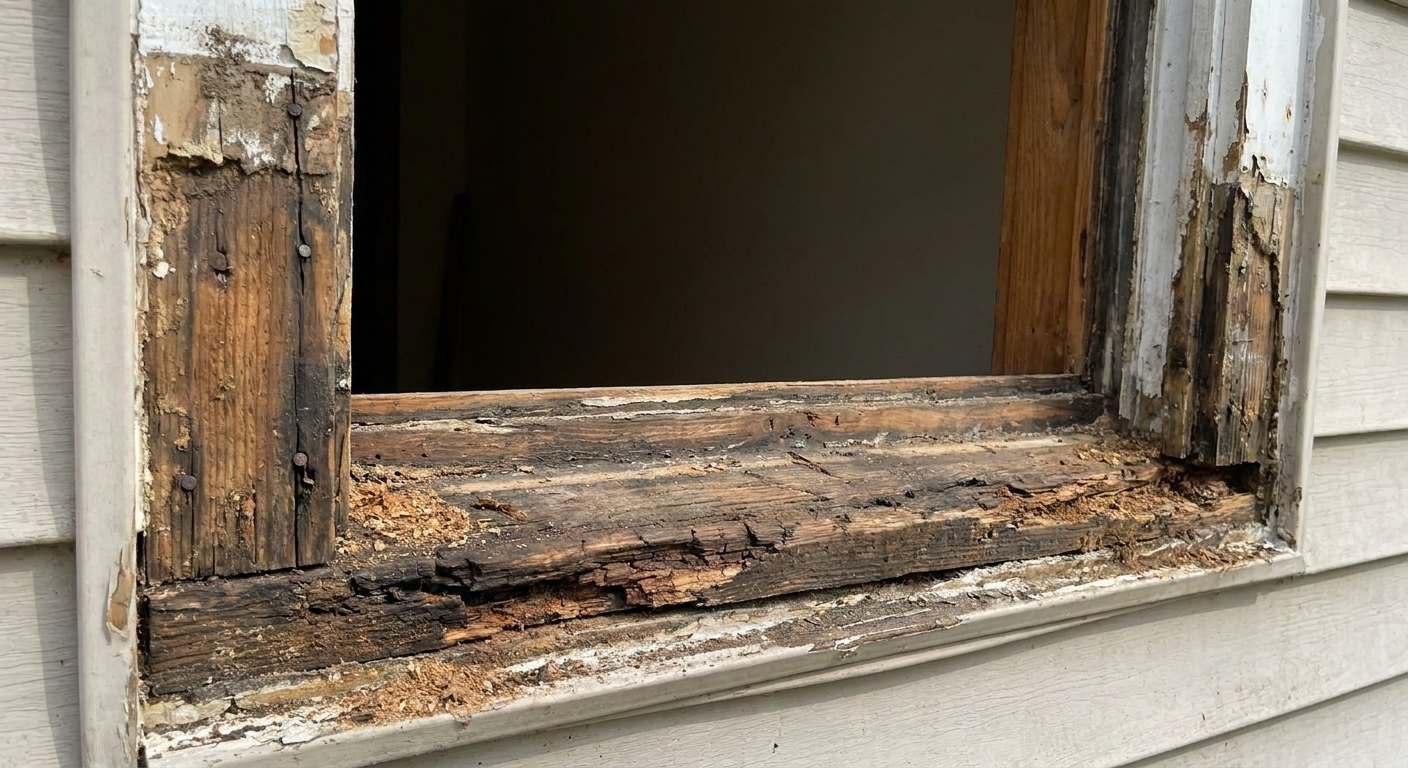
This is the part homeowners do not always get told clearly: a leaky window is not always a “bad window.” It can be a flashing issue, a siding integration issue, or an old rough opening with no modern water management.
What full-frame can fix that inserts usually cannot
- Rotted sill framing and sheathing hidden behind exterior trim
- Missing or failed flashing at the head and jambs
- Gaps in insulation between the rough opening and the frame
- Out-of-square openings that force a new window to be shimmed awkwardly
If your house has ever had water intrusion around windows, full-frame replacement is usually less risky long-term because it lets you see what you are marrying the new window to.
Efficiency and comfort
Either method can be very efficient with the right product and a careful install. The bigger difference is usually not “insert vs. full-frame,” it is how well the perimeter is air-sealed and whether water is being managed correctly.
- Inserts can perform great if the existing frame is sound and the installer foams and seals correctly.
- Full-frame can perform great because it allows a full reset: new flashing details, new insulation at the rough opening, and a clean substrate.
One tradeoff to know: inserts commonly reduce glass area a bit because the new unit sits inside the old frame. In most rooms, you barely notice. In a dark room or a room you are trying to brighten, it can matter.
If you are trying to get more daylight without changing windows yet, see Strategic mirror placement for more natural light.
During an in-home evaluation
If you are walking the house with a contractor or doing your own pre-check, here are the specific things I would look at before choosing a method.
Quick checks you can do yourself
- Probe the sill and lower corners. From the inside, press a screwdriver gently into painted wood. Soft wood is a red flag.
- Look for recurring sealant failures outside. If caulk cracks open every season, it can be movement, joint design, poor adhesion, or water getting behind the trim.
- Check operation. Hard-to-open windows can be balance failure, swelling, or frame distortion. If you have painted shut windows, see how to unstick a painted or swollen double-hung window before you assume replacement is required.
- Watch the trim after heavy rain. Any dampness at the lower corners or staining at the head is worth investigating.
Questions to ask an installer
- Will you be able to inspect the rough opening for rot with the method you are proposing?
- What is your plan for air-sealing at the perimeter, and what material will you use?
- How will you handle flashing at the head if you are doing full-frame?
- If you are recommending inserts, what condition does the existing frame need to be in for you to warranty the install?
Older homes and tricky exteriors
Older wood windows
Many older homes have beautifully built original frames. If the frame is solid and you want to keep interior trim details, inserts can be a smart compromise. If there is sill rot or the opening has been taking water for years, full-frame is usually the safer reset.
One more real-world note: if your home was built before 1978, assume there may be lead paint on older trim. Full-frame work can disturb more painted surfaces, so it is worth asking what containment and cleanup practices will be used.
Brick exteriors
Brick homes often involve details like a brick mold, limited access to a nailing flange, or a specific way the window ties into a masonry opening. Both inserts and full-frame can be done, but the decision leans heavily on whether there is evidence of water issues and whether you need access to modernize flashing details.
Old aluminum frames
Aluminum can be tricky because condensation and sweating can mimic a leak. Full-frame may give you the biggest comfort jump when it lets you improve air sealing and replace a cold frame with a better-insulated system. Still, if indoor humidity is high, even good windows can sweat, so do not skip the humidity and ventilation conversation.
Permits and code
Most like-for-like replacements are straightforward, but changes in size, style, or location can trigger code requirements. Egress windows, tempered glass in certain locations, and fall protection rules are common examples. If you are making changes beyond a simple swap, ask early how permitting and code compliance will be handled so you do not get surprised mid-project.
My rule of thumb
Rule of thumb: If the existing frame is solid, dry, and square enough, an insert replacement is a clean, efficient upgrade. If there is rot, water staining, or you want to correct problems around the opening, full-frame replacement is worth the disruption.
The big exception: If you cannot confidently confirm the frame is solid because trim is hiding suspicious staining or softness, lean toward full-frame or at least insist on a plan to inspect and address what is behind the trim. New windows do not magically fix old water paths.
FAQ
Does insert replacement always reduce the glass size?
Usually a little, because the new frame sits inside the old one. Some systems minimize this, but it is common to lose a bit of visible glass.
Is full-frame replacement always better?
Not always. If your existing frame is in great shape, full-frame can be more work and cost than you need. “Better” is the method that addresses your home’s actual problems with the least collateral damage.
Can I switch to a different window style with an insert?
Sometimes, but it is limited. Big style changes generally go smoother with full-frame because you can rebuild the opening details correctly.
What if I want to keep my interior trim?
That is a common reason people choose inserts. Full-frame can still preserve trim in some cases, but it depends on how it is built and whether it must be removed to access the opening properly.
Simple checklist
- Choose insert if frames are solid, you want minimal disruption, and your main goal is comfort and function.
- Choose full-frame if there is any rot, any recurring water evidence, you are remodeling, or you want to correct the opening and flashing details.
If you want more step-by-step context on the whole process, start with our Window Replacement guide. I wrote it to give you a clear picture of what happens before, during, and after installation so there are fewer surprises.