

The first winter in my 1970s split-level, I had a bedroom window that was so stuck I honestly wondered if it had been nailed shut. Turns out it was “just” paint, a little humidity swelling, and years of grit packed into the tracks. The good news is most double-hung windows can be freed up without replacing anything, as long as you go slowly and do not force the sash.
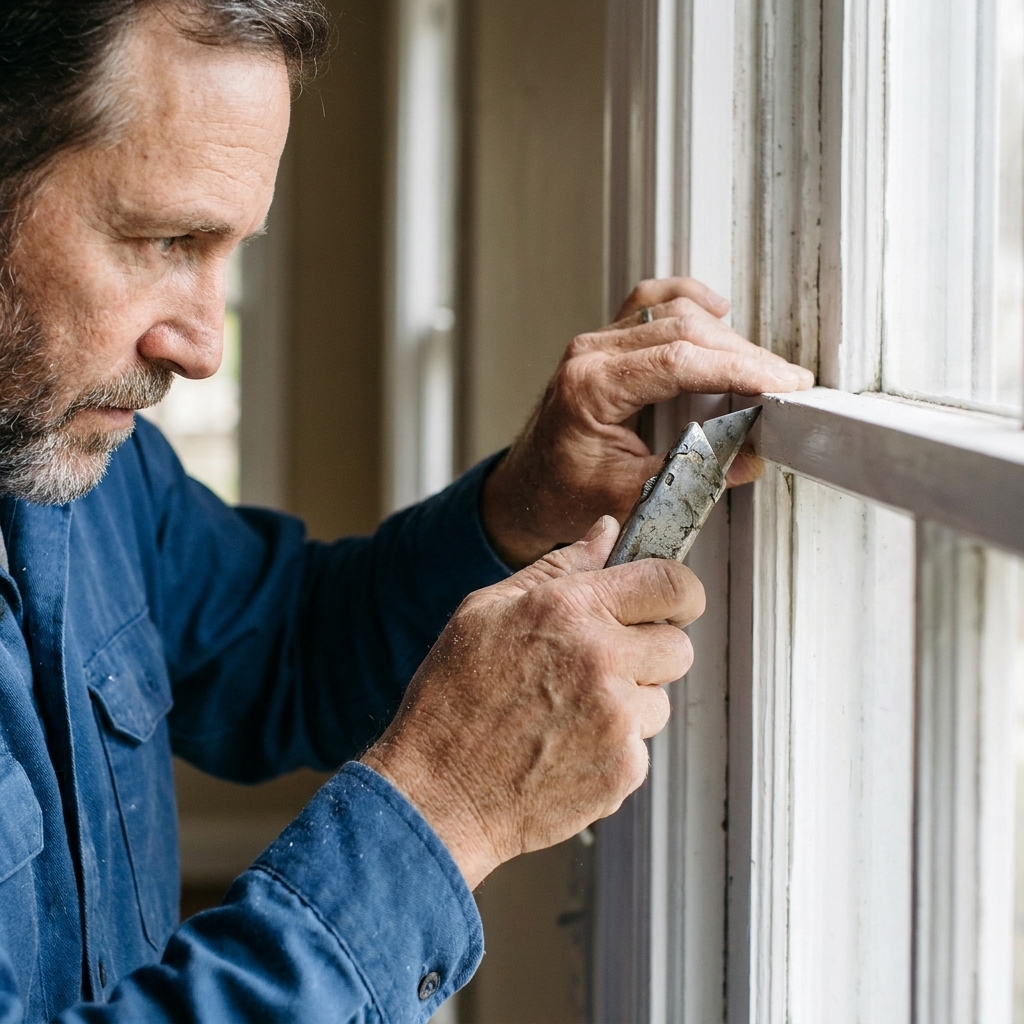
Below is my practical, do-this-next checklist for painted-shut wood windows and sticky vinyl units, plus what to try when swelling is part of the problem.
Before you start: do not muscle it
If you yank hard on a stuck sash, a few annoying things can happen fast: the glass can crack, the sash can rack (twist) and bind even worse, or the balance system may get knocked out of place inside the jamb. Instead, your job is to break the bond and reduce friction.
- Work in small moves. Aim for millimeters at first, not inches.
- Support the sash. Use two hands near both corners so it lifts evenly.
- Protect the sill and paint. Lay a towel on the sill and have a putty knife handy.
Safety note: Never pry against the glass or the glazing. If you use a putty knife or small pry bar on a wood window, put a thin piece of wood or a paint stir stick under it to protect the finish and spread the pressure.
Tools and supplies that actually help
- Sharp utility knife with a fresh blade
- 5-in-1 painter’s tool or stiff putty knife
- Thin pry bar (optional, for wood windows only, used gently)
- Vacuum with crevice tool and an old toothbrush
- Silicone spray or a silicone-based dry lube (best for vinyl tracks)
- Paste wax (great for wood-on-wood friction)
- Rag, warm soapy water
- Hair dryer (for minor seasonal stickiness) or a dehumidifier (for ongoing humidity)
A note on WD-40: It can help as a short-term cleaner or water displacer, but it is not a great long-lasting window-track lubricant and it can leave a residue that collects dirt. If you already used it, clean the track well and switch to silicone or wax afterward.
Step 1: Break the paint seal
In my experience, paint is one of the most common reasons older double-hung windows will not budge, especially where the sash meets the stop and where the two sashes touch at the meeting rail.
Where to score
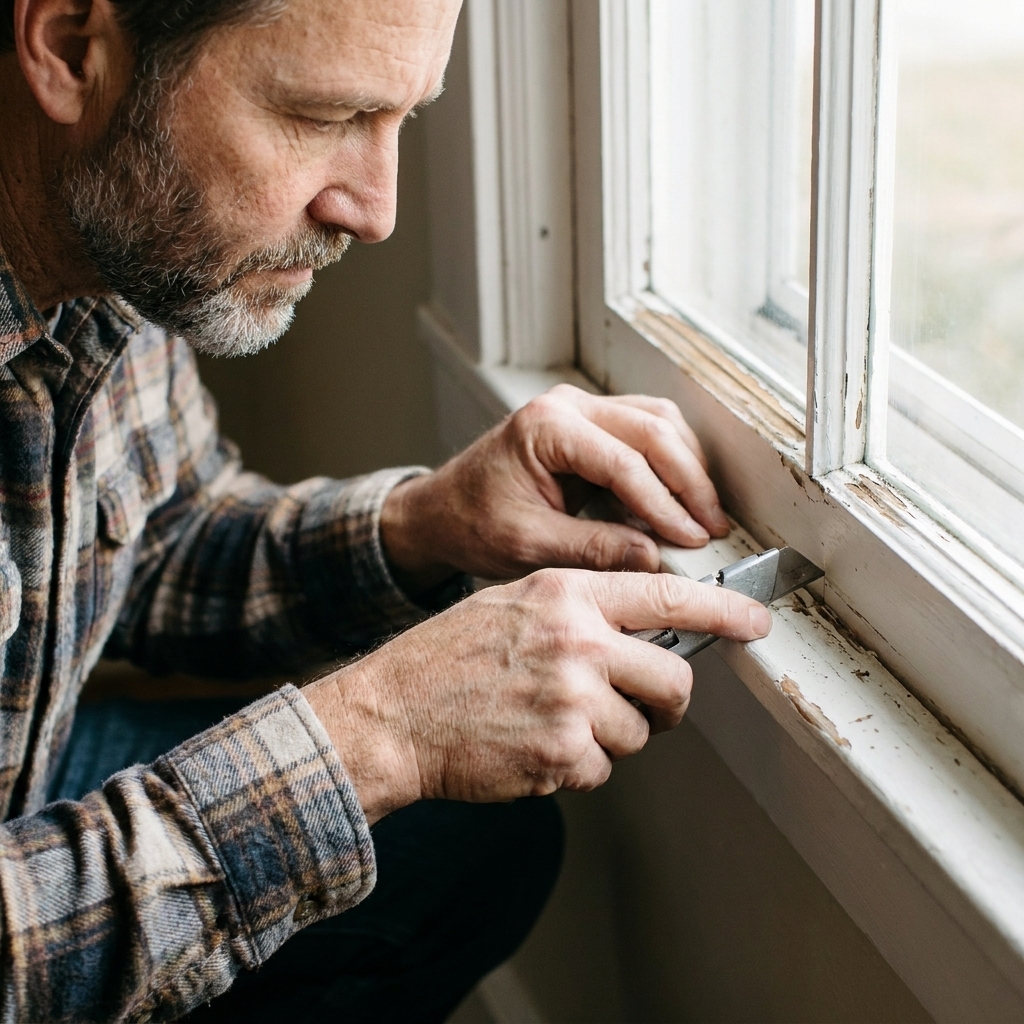
- Inside perimeter of the lower sash: score the seam where the sash meets the interior stop on both sides, plus the top edge of the lower sash where it meets the stop.
- Along the meeting rail: score the seam between the top and bottom sash (this one is easy to miss).
- At the exterior edge (if accessible): if the window was painted from outside, paint can bridge there too.
How to score without gouging
- Angle the blade so it rides in the seam, not into the wood or vinyl.
- Make two or three light passes instead of one deep cut.
- Replace blades often. A dull blade slips and causes damage.
Tip from my own mistakes: If the paint bead is thick, score it, then slide a 5-in-1 tool or putty knife into the seam and gently work it along the edge to pop the paint bridge. Keep the blade flat and away from the glass.
Step 2: Free the sash evenly
Once the paint seal is cut, try to move the sash in a controlled way.
- Unlock the window. Sounds obvious, but I have absolutely been that guy.
- Press in near both bottom corners. Push the sash straight inward toward the room (just a little), then try lifting. This helps break friction points without twisting the sash.
- Try a thin putty knife under the bottom rail (wood only). If there is a small gap, you can use it to lift slightly while pulling up by hand. Use a thin shim under the knife to avoid denting the sill.
If it moves a tiny bit and stops, do not force it. That usually means there is still paint bonded somewhere. Re-score the areas above, especially at the meeting rail.
Quick heads-up on very old wood windows: If your window uses sash cords and weights (you might hear a weight thump inside the side pocket, or see a little access panel in the jamb), forcing a stuck sash can snap an old cord. That is fixable, but it is a different project than simply freeing paint.
Step 3: Clean the tracks and jambs
On vinyl and many newer wood windows, the sash rides in channels that love to collect dust, pet hair, and dead bugs. That grit acts like sandpaper and can wedge the sash. Cleaning is often the biggest improvement.
- Vacuum the side jamb channels thoroughly.
- Scrub stubborn grime with a toothbrush and warm soapy water.
- Wipe dry. Lubricants work best on clean surfaces.
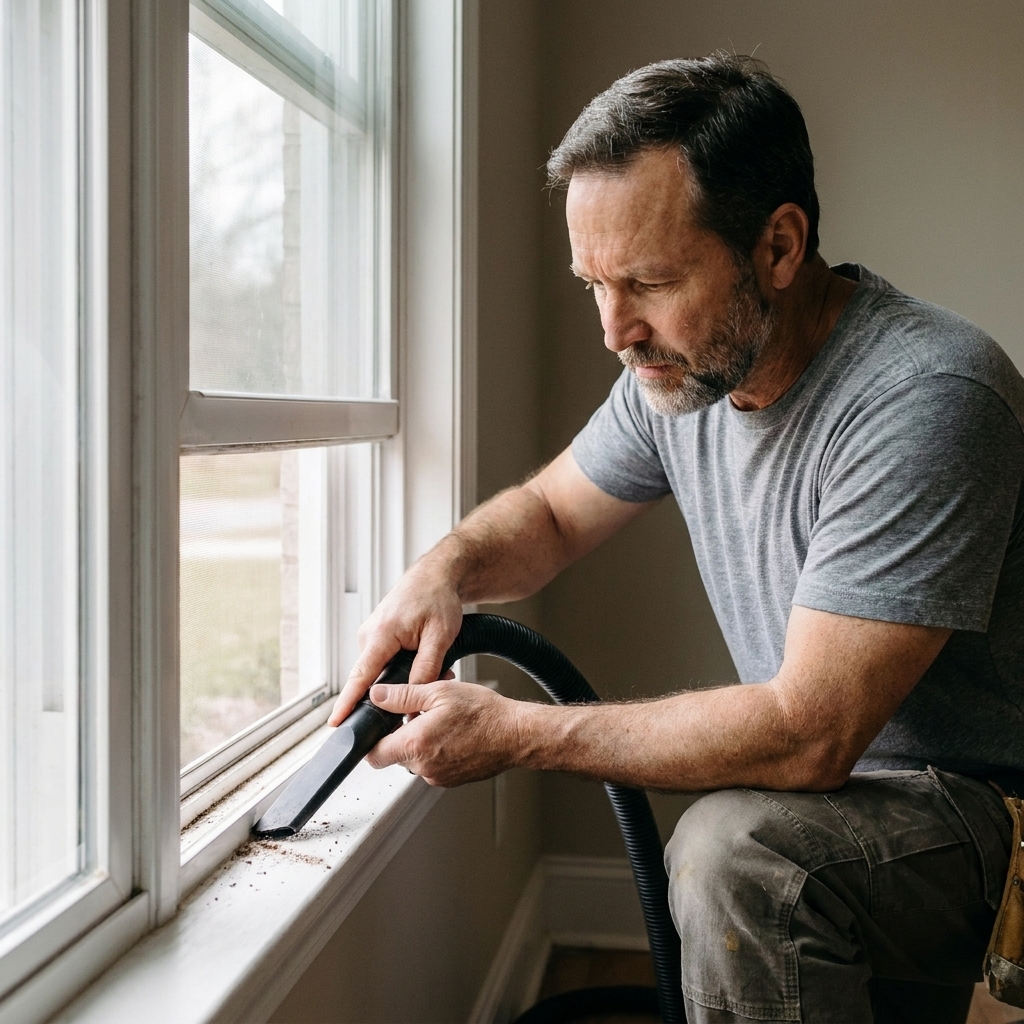
Quick check: Look for paint drips or caulk blobs in the track. Those can create a hard stop. Carefully shave them flush with a utility knife.
Also check weatherstripping: On vinyl windows, the fuzzy pile weatherstrip can fold over, bunch up, or come loose and act like a brake. If you see it curled into the path of the sash, gently straighten it and clean around it.
Step 4: Lubricate the right surfaces
Lubrication is not about soaking the whole window. You want a thin, controlled coating where friction happens.
For vinyl windows
- Use a silicone spray or silicone dry lube.
- Spray onto a rag first, then wipe the jamb liners and contact points. This keeps overspray off the glass and helps avoid gumming up the track.
- Cycle the sash up and down a few times, then wipe away any excess.
For older wood windows
- Use paste wax on sash edges and the parting bead area where wood rubs wood.
- Buff it lightly. You want slick, not goopy.
Avoid: grease and heavy oils. They turn tracks into grime magnets.
If it is swollen wood
Swelling usually shows up after humid weather or a leak, and it often feels different than paint. With paint, the window feels glued and then releases. With swelling, it feels like it wants to move but wedges tight.
Try the non-destructive options first
- Run a dehumidifier nearby for a day or two if indoor humidity is high.
- Use a hair dryer on low to gently warm the jamb area for a few minutes, then try moving the sash. This can help with minor seasonal stickiness, but it will not fix truly waterlogged wood. Keep the air moving and avoid heating the glass or old glazing putty.
- Wax the contact points after cleaning.
Find the rub spot
Open the sash as far as you can and look for shiny burnished areas or scraped paint on the sash edges. Those spots tell you where it is binding.
When light sanding is appropriate
If you have a wood sash that repeatedly sticks at the same spot, very light sanding can help, but treat it like trimming a door that rubs. Remove as little as possible.
- Mark the rub area with pencil.
- Use 120 to 150 grit sandpaper on a sanding block.
- Take a few passes, vacuum dust, test fit, repeat if needed.
- Seal bare wood with primer and paint so it does not swell again.
Important: If your home was built before 1978, assume paint could contain lead. Use lead-safe practices and consider calling a pro if sanding or scraping is needed. EPA guidance is here: https://www.epa.gov/lead.
If it is vinyl: check balances and latches
Vinyl double-hung windows can stick because a balance shoe is out of position, the tilt latches are not fully engaged, or the sash is not seated evenly.
Common symptoms
- Sash tilts and binds when you try to lift it.
- One side moves and the other side stays put.
- It drops suddenly after you finally get it moving.
Easy checks you can do
- Confirm the sash is not tilted in. If it is a tilt-in sash, make sure both tilt latches are clicked fully back into place.
- Lift from the center, then guide the corners. Sometimes you can re-square it by lifting gently while nudging the stuck side upward.
- Inspect the jamb liners. If a liner is bowed inward, it can pinch the sash. Cleaning and silicone on the liner often helps.
- Look for folded weatherstrip. A bunched-up fuzzy strip can create sudden drag.
If a balance shoe is broken or disconnected, that can turn into a parts hunt specific to your window brand. At that point, you are in repair or replace territory. If you want to think through that decision, our replacement basics live here: /guide-window-replacement/.
Painted shut outside
Some windows are stuck because the sash was painted to the exterior stop, especially after a quick exterior repaint. If you can access the outside safely:
- Score the seam along the sash perimeter on the exterior side.
- Use a putty knife to gently separate the paint bridge.
- Open and close the window a few times to make sure you did not miss a spot.
Safety note: If you need a ladder, follow basic ladder safety and do not lean out to reach. If it is sketchy, stop and work from inside or call for help.
When to stop and call a pro
- Cracked glass, rotted wood, or soft spots around the sill or jamb
- Severe binding where the sash visibly twists when you apply light pressure
- Counterweights or sash cords that are broken (common on older wood windows)
- Possible lead paint and you would need to sand or scrape extensively
If you suspect a leak is causing swelling, that is a separate problem worth addressing quickly. Water damage snowballs. Our DIY guides are collected here: /guide-window-diy/.
Quick FAQ
How do I tell if it is paint or swelling?
Paint feels glued and releases suddenly once the seal breaks. Swelling feels like a tight wedge and often changes with humidity and season.
What lubricant is best for double-hung windows?
For vinyl, use silicone (spray or dry lube) on clean tracks. For wood, paste wax on contact points works great and stays cleaner than oily products.
My window opens a little then stops. What now?
That usually means you missed a paint seam (often the meeting rail), the weatherstrip is folded into the path, or there is debris in one side track. Re-score, vacuum, and try again with small, even movement.
Can I plane a wooden sash to make it fit?
You can, but it is the last resort after humidity control, cleaning, and waxing. Remove as little material as possible and reseal bare wood so the problem does not return.
A simple keep-it-moving routine
Once you get a sticky double-hung moving again, a little maintenance keeps it that way.
- Vacuum tracks every season change.
- Wipe vinyl jamb liners and reapply a light silicone coat once or twice a year.
- On wood windows, touch up bare spots promptly and keep interior humidity in check.
If you are working through a whole-house to-do list, I keep my sanity by tackling one category at a time. Our Command Line archive is built for that kind of methodical DIY: /guide-command-line/.